
334
Suture Material Choice
In general, 5-0 or 6-0 absorbable suture
material is o ten used on the lips, as it
is elsewhere on the ace. Depending on
surgeon pre erence, braided or mono la-
ment suture material may be used.
Since lip repairs are generally
approached in a layered ashion, absorb-
able suture may be used or both muscle
and dermal repairs. For ull-thickness
de ects, when the inner mucosal sur ace
needs to be repaired rst, ast-absorbing
gut may be used rst to reapproximate
this di cult to reach layer.
For most lip repairs, 6-0 or 7-0 nonab-
sorbable sutures are generally appropriate.
Transepidermal lip repairs o ten take
advantage o the so tness o silk suture
material; while it is among the most reac-
tive suture materials, its pliability makes
it a good choice when repairs on the
vermilion and mucosal lip are necessary
in order to avoid the poking e ect o
nylon sutures. Similarly, ast-absorbing
gut suture may also be used in these loca-
tions, and con ers the added advantage
that suture removal is not necessary.
Suture Technique Choice
Standard buried dermal techniques, such
as the set-back dermal and buried vertical
mattress approaches, are requently used
on the lips (Figure 6-8). One important
exception is around the vermilion border,
The Lips
C H A P T E R 6 . 8
The lips, like the eyelids, represent
a special site; they o ten have only a
modest dermal component, necessitat-
ing consideration o alternative repair
strategies, and represent a ree mar-
gin, as they are xed in place only by
muscle. There ore, any lateral tension
across the lips o ten translates into a
long-standing residual pull that does
not resolve w ith time.
Accurate reapproximation o the ver-
milion border is o critical importance
in lip repairs and reconstructions. Simi-
larly, any residual dog ears on the lips,
and particularly at the vermilion, do not
resolve with time. There ore, adequately
extending linear excisions and per orm-
ing a wedge resection when needed is o
paramount importance.
Appreciating the anatomic subtleties
and detail regarding the boundaries o
the cosmetic subunits o the lip, while
beyond the scope o this book, is a critical
prerequisite to approaching any repairs in
this cosmetically and unctionally sensi-
tive area.
While linear closures are, as always,
pre erred, the lack o any bony attach-
ments means that residual pull will o ten
not resolve on the lip. There ore, larger
de ects may bene t rom f ap closures,
where additional suture techniques, such
as the tip stitch, buried tip stitch, vertical
mattress tip stitch, or hybrid mattress tip
stitch could be use ul.
Simple interupted suture
Simple running
suture
Buried vertical
mattress suture
Tip stitch
335
The Lips
where overeversion should be assidu-
ously avoided in order to preserve the
integrity o the white line. In these areas,
buried vertical mattress techniques, or
even a simple buried dermal approach,
may sometimes be more appropriate.
As with the eyelids, since the lips rep-
resent a ree margin dog ears or marked
hyper-eversion may resolve slowly, i at
all (Figure 6-8).
Transepidermal approaches should
be used with caution on the mucosal
lip, and the rich vasculature o the lip
should be kept in mind when placing
transepidermal sutures that may lead to
inadvertent piercing o underlying vessels.
Conversely, mild residual oozing may be
approached by placing a series o simple
interrupted sutures or simple running
sutures, as the hemostatic e ect o this
approach may place indirect pressure
on the small leaking vessels leading to
adequate hemostasis. The running lock-
ing suture, while expressly advocated
or this purpose, is rarely needed on the
lip i adequate hemostasis was obtained
prior to nal closure. When it is used,
however, care should be taken to avoid
overtightening the individual loops o
suture, as this may lead to tissue necrosis.
Simple interrupted sutures and depth-
correcting simple interrupted sutures may
also be use ul when ne tuning approxi-
mation o the lip margin. The ability o
these interrupted approaches to guarantee
precise wound-edge alignment is o para-
mount importance on these cosmetically
sensitive closures, where a single mil-
limeter o misalignment could have a
dramatic e ect on overall acial cosmesis.
Simple interupted suture
Simple running
suture
Buried vertical
mattress suture
Tip stitch
Figure 6-8. Frequently used suturing techniques on the lips.
336
others come rom a need to recreate a
natural depression, such as the alar groove
or naso acial sulcus.
Linear repairs on the nose are o ten
possible even or larger de ects, as wide
undermining and the potential or tissue
recruitment may permit midline repairs
even when at rst blush this does not
seem easible. Care ul attention to dog-ear
correction is o paramount importance.
Local f aps and gra ts, o course, may
be utilized very requently on the nose,
though larger f aps, such as the parame-
dian orehead f ap, are very use ul or
reconstructing large de ects o the entire
nasal tip subunit.
Nasal repairs o all sorts, since they take
place on sebaceous skin, may bene t rom
dermabrasion approximately 3-9 months
postoperatively. This may help smooth
out any obvious repair lines on the nose,
which may appear depressed relative
to the surrounding sebaceous skin. It is
important to adequately prepare patients
or this possible eventuality.
Suture Material Choice
O ten, 5-0 absorbable suture is used or
the deeper layers o nasal reconstruction,
though both thicker and thinner suture
material is sometimes use ul depend-
ing on individual circumstances. The
P-3 reverse cutting needle is the most
requently used on the nose, though the
narrowness o some nasal wounds means
that a smaller semicircular needle, such
as the P-2 needle, may be use ul as well
The Nose
C H A P T E R 6 . 9
The nose is a requently encountered
surgical site or clinicians who ocus on
cutaneous reconstruction; the propensity
or nonmelanoma skin cancer develop-
ment in this area, coupled with its promi-
nent location in the central ace, only
solidi y the importance o appropriate
repair approaches in this area.
While understanding and appreciating
the importance o cosmetic subunits is
an essential prerequisite or all skin and
so t tissue reconstruction on the ace,
nowhere is this more important than
on the nose. Understanding that de ects
must be approached with cosmetic sub-
unit repair in mind, and with an atten-
tion to restoration o the natural subunit
boundaries and contours, is perhaps the
undamental theoretical building block
o all nasal reconstruction.
The three-dimensional complexity o
the nose similarly necessitates particular
attention. This is important not only or
sur ace anatomy, where the inversion o
the alar groove, or example, must always
be recreated i violated, but also or the
various layers o tissue that may require
individual suturing and reconstruction—
rom cartilage to muscle to dermis.
All o these undamental reconstructive
and anatomical considerations necessar-
ily translate into a rich array o suturing
techniques that may be utilized when
approaching nasal de ects. Some stem
rom necessity, as narrow nasal wounds
may not easily permit insertion o typical
vertically oriented buried sutures, while
Tip stitch
Percutaneous
buried vertical
mattress suture
Running diagonal
mattress
suture
Tie over suture
Buried
vertical
mattress
suture
Set-back
dermal
suture
Percutaneous
set-back dermal
suture
Simple running
suture
337
The Nose
in order to permit insertion o the needle
body into the wound or placement o
vertically oriented buried sutures. While
less readily available, consideration could
also be given to utilizing a small cut-
ting needle (or even a tapered needle),
as opposed to a reverse cutting needle,
since sometimes the atrophic sebaceous
nasal skin has a tendency to tear as the
reverse cutting needle moves super cially
through the upper dermis.
For transepidermal techniques, 6-0
or 7-0 suture material is generally used
on the nose. Since this outside layer o
sutures o ten bears minimal tension, a
ast-absorbing gut suture may be used
as well, obviating the need or suture
removal while potentially increasing the
risk o tissue reactivity.
Suture Technique Choice
Standard buried techniques, such as
the set-back suture or buried vertical
mattress suture, are requently used on
the nose, though or smaller closures
it may be di cult to place these verti-
cally oriented sutures. Utilizing a small
P-2 needle may permit easier placement
o vertically oriented buried sutures,
though the semicircular nature o the
needle means that it is more suited to
set-back suture placement than buried
vertical mattress suturing (Figure 6-9).
Another approach to closing narrow
nasal wounds is the use o the percutane-
ous variations o the vertically oriented
approaches, such as the percutaneous set-
back suture or percutaneous buried verti-
cal mattress. The percutaneous horizontal
mattress suture could be used as well,
though it provides less precise wound-
edge apposition and a higher theoretical
risk o tissue necrosis. I percutaneous
approaches are used, the individual nasal
skin type should be addressed, as patients
with highly sebaceous skin may have
more o a tendency to have trouble with
residual dimpling rom the percutaneous
portions o the sutures.
Hyper-everting the w ound edges
should be avoided when working in the
naso acial groove, as eversion in this area
may not resolve with time and could
there ore leave a residual ridge. Similarly,
the alar groove and other natural creases
may be recreated using inverting tech-
niques such as the simple buried suture,
the inverting horizontal mattress suture,
or the Lembert suture.
Suspension sutures may be used when
recreating the more dramatic skin olds,
such as the naso acial sulcus and naso-
labial olds. In addition to standard sus-
pension sutures, the tie-over suture may
be utilized, as well as the buried vertical
mattress suspension suture, which add
the bene t o being able to tack the suture
material once the buried dermal suture is
placed and the degree o tenting (or lack
o inversion) is established.
Suspension sutures may also be used
to maintain the patency o the alar valve.
Traditionally, cartilage gra ts have been
placed to bridge open the alar valve, but
placing a single superolaterally based sus-
pension suture may quickly accomplish
the same goal with only minimal morbid-
ity and no need or a gra t harvest.
Quilting sutures may be use ul on large
f aps in order to maintain the natural con-
tour o the nose and minimize the risk o
hematoma ormation. These sutures may
be conceptualized as an externally placed
percutaneous tacking suture, where the
epidermis is tacked to the underlying
so t tissues.
338
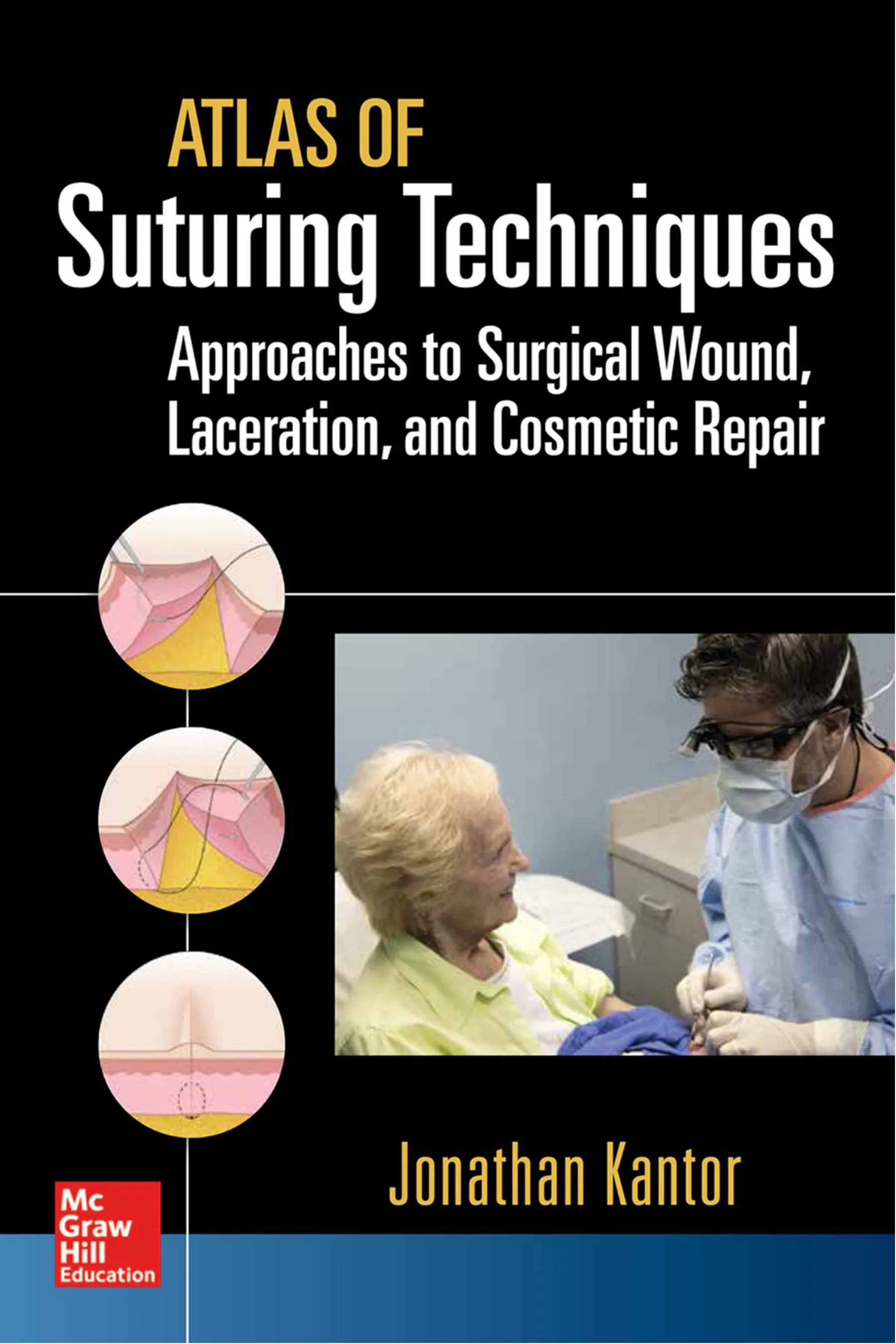
Atlas of Suturing Techniques: Approaches to Surgical Wound, Laceration, and Cosmetic Repair
Figure 6-9. Frequently used suturing techniques on the nose.
Tip stitch
Percutaneous
buried vertical
mattress suture
Running diagonal
mattress
suture
Tie over suture
Buried
vertical
mattress
suture
Set-back
dermal
suture
Percutaneous
set-back dermal
suture
Simple running
suture
339
These repair considerations are impor-
tant when approaching suturing tech-
niques, which serve as the undamental
building blocks o e ective cosmetically
appealing repairs. Many small de ects
along the helix may be repaired with
a small complex linear repair perpen-
dicular to the helical rim, while larger
de ects may necessitate a single or double
advancement ap. Precise suturing tech-
niques help hide scars along the cosmetic
subunits o the ear, where eversion is
critical to healing, particularly when
transversely oriented repairs are used
so that the suture line crosses cosmetic
subunit boundaries.
Suture Material Choice
Generally, 5-0 absorbable suture is used or
the deeper component o most ear repairs,
though a heavier suture may be used when
securing larger aps in place in the retro-
auricular area or when tacking back the
ear. Though the P-3 reverse cutting needle
is generally used, narrower repairs may
benef t rom the smaller P-2 needle.
Transepidermal repairs may use 6-0
nonabsorbable suture, though 5-0 or 6-0
ast-absorbing gut may be use ul as well
and obviate the need or suture removal.
For gra ts, 5-0 or 6-0 gut or the newer
rapid-absorbing synthetic sutures are
excellent options as they avoid the need
or suture removal, which on a gra t site
could traumatize the delicate gra t and
potentially impair healing.
The Ears
C H A P T E R 6 . 1 0
The ears, like the nose, have a complex
three-dimensional array o ridges and
valleys that must be respected i a recon-
struction is to return the appearance o
normal. Since the cartilaginous strut o
the ear provides its basic structural integ-
rity, the ear represents a type o ree
margin. Appreciating where the rigidity
o the cartilaginous strut will orce a der-
mal repair back toward the appearance
o normalcy is an important principle o
ear reconstruction, and may permit linear
closures o larger de ects.
Tissue recruitment rom the posterior
ear, retroauricular sulcus, and mastoid
allow or complex ap repairs on the
helix and beyond. When the immediate
postoperative e ect is pinning back the
ear, this may resolve w ith time, and
there ore retroauricular sulcus-based
transposition aps may be an excellent
option or many helical repairs.
While as a general rule skin gra ts
should o ten be avoided in avor o
ap repairs, repairs o the nonmargin
areas o the ear, such as the conchal
bow l, are readily accomplished w ith
ull-thickness skin gra ts, w here the
retroauricular area provides a locus o
plenti ul donor tissue.
The ears are also unique in that ap
repairs can twist in three dimensions
so that an advancement or rotation ap
may also have a signif cant twisting com-
ponent, permitting even greater tissue
recruitment and mobility.
Set-back
dermal suture
Simple interrupted
sutures
Inverting horizontal
mattress suture
Lembert
Simple running
suture
340
Atlas of Suturing Techniques: Approaches to Surgical Wound, Laceration, and Cosmetic Repair
Suture Technique Choice
Everting set-back dermal or buried ver-
tical mattress sutures are use ul when
closing most ear de ects, as they provide
excellent wound-edge approximation and
eversion. Since some ear de ects may be
very narrow, percutaneous variations o
these approaches may be utilized as well.
Another e ective approach or the
closure o narrow wounds is the percu-
taneous horizontal mattress suture. This
technique also permits a smaller number
o sutures to be placed in total, as each
suture incorporates a broader area.
For recreating natural grooves, the
inverting horizontal mattress suture
and Lembert suture may be utilized. In
pronounced cases, suspension sutures
may be utilized as well, but care should
be taken when tacking sutures to underly-
ing cartilage (Figure 6-10).
When securing a gra t, placing a series
o simple interrupted sutures is o ten the
best approach. Simple running sutures
may also be used; either way, starting
the suture rom the gra t and securing it
to the surrounding skin may help mini-
mize gra t motion during active suturing.
Fast-absorbing gut suture allows or easy
suture placement without the need or
suture removal. I a bolster is then used
to secure the gra t, it may be sutured
in placed with a running or interrupted
bolster suture.
Figure 6-10. Frequently used suturing techniques on the ears.
Set-back
dermal suture
Simple interrupted
sutures
Inverting horizontal
mattress suture
Lembert
Simple running
suture
CONTENTS
341
A
Adhesive strip bolster technique, 293–296,
293 –295
orearm atrophy, 322
legs, 324, 324
Adhesive strips, 21
Adson orceps, 8
Allgöwer-Donati suture, 235–238,
235 –236
Areola, 316–317
Arms, 320–322, 321
anatomic location, 320
closure along long axis, 320
linear closure, 321
s-plasty, 321, 321
sun-exposed areas, 320
suture material choice, 320–321
suture technique, 321–322, 321
B
Back, 316–319, 318 . See also Chest, back, &
shoulders
Backing out running subcuticular suture,
48–51, 49 –50
Backing out subcuticular suture, 48–51,
49 –50
Backtracking running butter y suture,
163–166, 164 –165
Biosyn (glycomer 631), 12t, 13, 14t
Bishop-Harmon orceps, 8
Bite, 2
Blade, surgical (scalpel), 6
Bolster sutures
interrupted, ears, 340
running, 303–305, 303 –304
ears, 340
Bolster technique, adhesive strip, 293–296,
293 –295
orearm atrophy, 322
legs, 324, 324
Bootlace suture, 156–159, 157 –159
Braided sutures, throws, 15
Buried horizontal mattress sutures, 35–37, 36
orearms, atrophic, 322
hands and eet, 326
percutaneous, 61–64, 62 –63
nose, 337
shins, 324
Buried purse-string suture, 140–143,
142 –143
Buried sutures, 1, 24–26, 25 –26
advantages, 3
continuous, backstitch, 163–166,
164 –165
double buried
dermal, 85–88, 86 –87
vertical mattress (See Pulley buried
vertical mattress suture)
ully buried, horizontal mattress, 35–37,
36
orearms, atrophic, 322
instrument tie technique, 16–21, 19 –20
lips, 334
modif ed dermal
arms, 322
chest, back, & shoulders, 318
nose, 337
Buried sutures, pulley
dermal, 85–88, 86 –87 (See also Pulley
buried vertical mattress suture)
lateral, 108–110, 109 –110
hal pulley
dermal, 108–110, 109 –110
vertical (mattress), 99–102, 100 –102
hands and eet, 327, 327
vertical mattress, 94–98, 95 –96
arms, 322
chest, back, & shoulders, 318
hands and eet, 327
scalp, 329
Buried sutures, running
dermal, 65–67, 66 –67
vertical mattress, 72–75, 73 –74
percutaneous, 81–84, 82 –84
Buried sutures, simple dermal, 24–26,
25 –26
lips, 334
nose, 337
INDEX
Note: Page numbers ollowed by an and a t indicate f gures and tables, respectively.
342
Index
Buried sutures, vertical mattress
modif ed, 52–55, 53 –55
scalp, 329
percutaneous
orearms, atrophic, 322
hands and eet, 326
nose, 337, 338
running, 81–84, 82 –84
scalp, 328, 329
shins, 324, 324
Buried tip stitch, 160–162, 161
lips, 334
Buried vertical mattress suspension suture,
121–123, 122
nose, 337
Buried vertical mattress sutures, 31–34,
32 –33
arms, 321, 321 , 322
back and shoulders, 319
chest, back, & shoulders, 317, 318
ears, 340, 340
eyelids, 332, 333
orehead, 330, 331
hands and eet, 326, 327
legs, 323, 324
lips, 334–335, 335
nose, 337, 338
Butter y sutures, 38–41, 39
backtracking running, 163–166,
164 –165
double, 103–107, 104 –106
hands and eet, 327
C
Caprosyn (polyglytone 6211), 13, 14t
Catgut, 13, 14t
Chest, back, & shoulders, 316–319
linear wound closing, 316
nipple unit and umbilicus, 316–317
patient activity levels, anticipating, 316
suture material choice, 317
suture technique choice, 317–319, 318
Chromic gut, 13, 14t
Combined horizontal mattress and simple
interrupted suture, 286–289,
287 –288
Combined vertical mattress-dermal suture,
306–309, 306 –308
Continuous buried backstitch, 163–166,
164 –165
Continuous oblique mattress suture,
223–225, 224 –225
Corner stitch, modif ed, 261–264,
262 –263
Corset plication suture, 127–130, 128
Covidien, 11, 12, 12t, 13t
Criss-cross tie-over tacking suture, 121–123,
122
nose, 337
Cross stitch, 310–313, 311 –312
Cruciate mattress suture, 220–222, 221
Cutting needles, 11–12, 11t
D
Deep tip stitch, 160–162, 161
Depth-correcting simple interrupted suture,
179–181, 180
eyelids, 333, 333
lips, 335
Dermal buried pulley suture. See Pulley
buried vertical mattress suture
Dermal sutures, buried
double, 85–88, 86 –87
modif ed
arms, 322
chest, back, & shoulders, 318
simple, 24–26, 25 –26
lips, 334
nose, 337
Dermal sutures, combined vertical mattress
and, 306–309, 306 –308
Dermal sutures, pulley
buried, 85–88, 86 –87
hal pulley, 108–110, 109 –110
vertical, 99–102, 100 –102
vertical, hands and eet, 327, 327
lateral, 108–110, 109 –110
vertical mattress, 94–98, 95 –96
scalp, 329
set-back, 89–93, 90 –91 , 108–110,
109 –110
arms, 322
chest, back, & shoulders, 318, 318
orehead, 331
hands and eet, 27
scalp, 329, 329
Dermal sutures, running
buried, 65–67, 66 –67
locked intradermal, 171–174,
172 –174
Index
343
percutaneous set-back, 76–80, 77 –78
scalp, 329
set-back, 68–71, 69 –70
Dermal sutures, set-back, 27–30, 28 –29
advantages, 3
arms, 321, 321 , 322
back and shoulders, 319
chest, back, & shoulders, 317, 318
chest keloids, 29
double (See Pulley set-back dermal
suture)
ears, 340, 340
eyelids, 332, 333
orehead, 330, 331
hands and eet, 326, 327
knees, 325
legs, 323, 324
lips, 334
nose, 337, 338
percutaneous, 2, 56–60, 57 –59
orearms, atrophic, 322
hands and eet, 326
nose, 337, 338
running, 76–80, 77 –78
running, scalp, 329
scalp, 328–329, 329
shins, 323–324, 324
pulley, 108–110, 109 –110
running, 68–71, 69 –70
thighs, 325
Diagonal mattress suture, running,
231–234, 232 –233
nose, 338
Dog-ear tacking suture, 137–139, 138
orehead, 331, 331
scalp, 329, 329
Donati suture
shorthand vertical mattress, 239–241, 240
vertical mattress, 235–238, 235 –236
Double buried dermal suture, 85–88,
86 –87
Double buried vertical mattress. See Pulley
buried vertical mattress suture
Double butter y suture, 103–107, 104 –106
Double locking horizontal mattress suture,
226–230, 227 –229
Double loop mattress suture, 226–230,
227 –229
Double set-back dermal suture. See Pulley
set-back dermal suture
Double set-back suture. See Pulley set-back
dermal suture
Dressings, wound, 21
Dull-tipped blepharoplasty scissors, 9
Dynamic winch stitch, 279–282, 280 –281
E
Ears, 339–340, 340
Eschar, iatrogenic, 3
Ethicon, 11, 12, 12t, 13t
Excisional surgery wounds, suturing
principles, 2
Eyelids, 332–333, 333
Eyelid suspension suture, temporary,
297–298, 297 –298
F
Fascial plication suture, 124–126,
124 –125
Feet
broad undermining, 326
linear closure, 326
suture material choice, 326
suture technique, 326–327, 327
Figure 8 double purse-string suture,
148–151, 149 –150
Figure o 8 suture, 220–222, 221
Film dressing, 21
Forceps, 8, 8
Forehead, 330–331, 331
Frazier skin hook, 9
Frost suture, 297–298, 297 –298
eyelids, 333
Fully buried horizontal mattress suture,
35–37, 36
orearms, atrophic, 322
G
Gauze, nonwoven, 5, 5
Glycolide/lactide copolymer (Polysorb), 12t,
13, 14t
Glycomer 631 (Biosyn), 12t, 13, 14t
Granny knot, 15
G suture, 163–166, 164 –165
Guitar string suture, 134–136, 135
H
Hal -buried horizontal mattress suture,
258–260, 259 –260
344
Index
Hal pulley buried dermal suture, 108–110,
109 –110
Hal pulley buried vertical mattress suture,
99–102, 100 –102
hands and eet, 327, 327
Halsey needle driver, 6
Halstead, William, 1
Halsted mosquito hemostat, 9
Handles, scalpel, 6
Hands
broad undermining, 326
linear closure, 326
suture material choice, 326
suture technique, 326–327, 327
Haneke-Marini suture, 52–55, 53 –55
scalp, 329
Hemostasis, 3
Hemostats, 9
History, o suturing, 1
Horizontal mattress suture, 192–195,
193 –194 . See also Mattress
suture, horizontal
Hybrid mattress suture, 255–257, 256
Hybrid mattress tip stitch, 265–268,
266 –267
lips, 334
I
Imbrication suture, 131–133, 131 –132
ImPli, 111–114, 112 –113
ears, 340
orehead, 330, 331
nose, 337
Instrument tie, 15
buried sutures, 16–21, 19 –20
nonabsorbable sutures, 15–16, 16 –18
Interrupted bolster suture, ears, 340
Interrupted sutures
bolster, ears, 340
depth-correcting simple, 179–181, 180
eyelids, 333, 333
lips, 335
simple, 176–178, 177
arms, 322
bites, 2
chest, back, & shoulders, 318, 318 ,
319
disadvantages, 2
ears, 340, 340
eyelids, 332, 333
hands, 327
legs, 324
lips, 335, 335
shins, 325
simple, combined horizontal mattress
and, 286–289, 287 –288
Inverting horizontal mattress suture,
200–202, 201
ears, 340, 340
orehead, 331
nose, 337
Iris scissors, 9
K
Kantor suture. See Set-back dermal suture
Keloids, chest, set-back suture, 29
Knots
granny, 15
square, 15
Knot tying
deep suture, 15
nonabsorbable suture, 20–21
surgical, 15
throws, 2, 15
between transepidermal sutures, 15
L
Lacerations, approaches, 3–4
Langer’s lines, 320
Lateral pulley buried dermal suture,
108–110, 109 –110
Lattice stitch, 290–292, 290 –291
Legs, 323–325
suture material choice, 323
suture technique choice, 323–325, 324
Lembert suture, 283–285, 283 –284
ears, 340, 340
orehead, 331
nose, 337
Lips, 334–335, 335
Locking horizontal mattress suture,
196–199, 197 –198
Locking sutures
horizontal mattress, 196–199, 197 –198
double locking, 226–230, 227 –229
modif ed, 196–199, 197 –198
running, 216–219, 217 –218
running, 187–191, 188 –189
lips, 335
vertical mattress, 242–245, 243 –244
Index
345
Locking vertical mattress suture, 242–245,
243 –244
Loop mattress suture, 242–245, 243 –244
Loops, surgical, 5
Loop sutures
double loop mattress suture, 226–230,
227 –229
loop mattress suture, 242–245,
243 –244
running looped horizontal mattress
suture, 216–219, 217 –218
subcutaneous, 306–309, 306 –308
super, 167–169, 168 –170
M
Materials, needles, 11, 11
cutting, 11–12, 11t
reverse cutting, 11–12, 11t
suture, 11, 11
variety and characteristics, 11
Materials, sutures
absorbable, 12–15, 12t, 14t
chest, back, & shoulders, choice, 317
Ethicon and Covidien, 11, 12, 12t
between incised wound edges, 3
monof lament, 12
nonabsorbable, 14–15, 14t
Mattress sutures
continuous oblique, 223–225, 224 –225
cruciate, 220–222, 221
hybrid, 255–257, 256
loop, 242–245, 243 –244
double, 226–230, 227 –229
running
diagonal, 231–234, 232 –233
diagonal, nose, 338
oblique, 223–225, 224 –225
V, 231–234, 232 –233
Mattress sutures, horizontal, 192–195,
193 –194
arms, 322
back and shoulders, 319
chest, back, & shoulders, 318–319, 318
combined, and simple interrupted suture,
286–289, 287 –288
hands and eet, 327
inverting, 200–202, 201
ears, 340, 340
orehead, 331
nose, 337
knees, 325
legs, 324
locking, 196–199, 197 –198
double-locking, 226–230, 227 –229
modif ed, 196–199, 197 –198
percutaneous, 61–64, 62 –63
ears, 340
nose, 337
scalp, 328, 329
shins, 324
running, 203–206, 204 –205
alternating simple and, 212–215, 214
intermittent simple loops, 207–211,
208 –210
locking (looped), 216–219,
217 –218
scalp, 328, 329
shins, 325
Mattress sutures, horizontal buried, 35–37,
36
orearms, atrophic, 322
ully buried, 35–37, 36
orearms, atrophic, 322
hal -buried, 258–260, 259 –260
hands and eet, 326
percutaneous, 61–64, 62 –63
ears, 340
nose, 337
shins, 324
Mattress sutures, vertical, 235–238,
236 –237
combined mattress-dermal, 306–309,
306 –308
hands and eet, 327
legs, 324–325
locking, 242–245, 243 –244
percutaneous, 52–55, 53 –55
orearms, atrophic, 322
hands and eet, 326
nose, 337, 338
running, 81–84, 82 –84
scalp, 328, 329, 329
shins, 324, 324
running, 246–249, 247 –248
alternating simple and, 250–254,
251 –253
buried, 72–75, 73 –74
combined simple and, 250–254,
251 –253
percutaneous buried, 81–84, 82 –84
shorthand, 239–241, 240
346
Index
Mattress sutures, vertical buried, 31–34,
32 –33
arms, 321, 321 , 322
back and shoulders, 319
chest, back, & shoulders, 317, 318
double buried (See Pulley buried vertical
mattress suture)
ears, 340, 340
eyelids, 332, 333
orehead, 330, 331
hal pulley, 99–102, 100 –102
hands and eet, 327, 327
hands and eet, 326, 327
legs, 323, 324
lips, 334–335, 335
modif ed, 52–55, 53 –55
nose, 337, 338
percutaneous
orearms, atrophic, 322
hands and eet, 326
nose, 337, 338
running, 81–84, 82 –84
scalp, 328, 329
shins, 324, 324
pulley, 94–98, 95 –96
arms, 322
chest, back, & shoulders, 318
hands and eet, 327
scalp, 329
scalp, 329
suspension, 121–123, 122
nose, 337
Mattress tip stitch, vertical, 261–264,
262 –263
Maxon (polyglyconate), 12t, 13, 14t
Mayo-Hegar needle driver, 6
Metzenbaum scissors, 9
Modif ed buried dermal sutures
arms, 322
chest, back, & shoulders, 318
hal pulley buried vertical suture, 99–102,
100 –102
hands and eet, 327, 327
pulley buried vertical mattress suture,
94–98, 95 –96
scalp, 329
Modif ed buried vertical mattress suture,
52–55, 53 –55
scalp, 329
Modif ed corner stitch, 261–264,
262 –263
Modif ed locking horizontal mattress
suture, 196–199, 197 –198
Modif ed winch stitch, 279–282,
280 –281
Monocryl (poliglecaprone), 12t, 13, 14t
Monof lament nylon, 14, 14t
N
Needle driver, 6–7, 7 –8
with cutting component, 9
Needles, 11, 11
cutting, 11–12, 11t
reverse cutting, 11–12, 11t
semicircular P-2, 11
suture, 11, 11
Needle stick injury, avoiding, 15
Nipple, 316–317
Nomenclature, 1–2
Nonabsorbable sutures. See Sutures,
nonabsorbable
Nose, 336–337, 338
Novaf l (polybutester), 14, 14t
Nylon, 14, 14t
P
Patient positioning, 5
PDS I/II (Polydioxanone I/II), 12t, 13, 14t
Percutaneous, 2
Percutaneous buried vertical mattress
suture
orearms, atrophic, 322
hands and eet, 326
nose, 337, 338
running, 81–84, 82 –84
scalp, 328, 329
shins, 324, 324
Percutaneous horizontal mattress suture,
61–64, 62 –63
ears, 340
nose, 337
scalp, 328, 329
shins, 324
Percutaneous Kantor suture. See also
Percutaneous set-back dermal
suture
running, 76–80, 77 –78
scalp, 329
Percutaneous purse-string suture, 144–147,
145 –146
shins, 325
Index
347
Percutaneous set-back dermal suture, 2,
56–60, 57 –59
orearms, atrophic, 322
hands and eet, 326
nose, 337, 338
running, 76–80, 77 –78
scalp, 329
scalp, 328–329, 329
shins, 323–324, 324
Percutaneous suspension suture, 115–117,
116 –117
Percutaneous vertical mattress suture,
52–55, 53 –55
scalp, 329
Pexing suture, 111–114, 112 –113
ears, 340
orehead, 330, 331
nose, 337
Pleated suture, running, 299–302, 300 –301
Plication sutures
corset, 127–130, 128
ascial, 124–126, 124 –125
running ascial, 127–130, 128
Poliglecaprone (Monocryl), 12t, 13, 14t
Polybutester (Novaf l), 14, 14t
Polydioxanone I/II (PDS I/II), 12t, 13, 14t
Polyglactin 910 (Vicryl), 12–13, 12t, 14t
Polyglyconate (Maxon), 12t, 13, 14t
Polyglytone 6211 (Caprosyn), 13, 14t
Polypropylene (Prolene, Surgipro), 14, 14t
Polysorb (glycolide/lactide copolymer), 12t,
13, 14t
Positioning, patient, 5
Postoperative care, 21
Preparation, surgical site, 5
Principles, suturing
undamental, 2
or wounds under tension, 2
Prolene (polypropylene), 14, 14t
Pulley buried dermal suture, 85–88,
86 –87
Pulley buried vertical mattress suture,
94–98, 95 –96
arms, 322
chest, back, & shoulders, 318
hands and eet, 327
scalp, 329
Pulley Kantor suture. See also Pulley set-
back dermal suture
arms, 322
chest, back, & shoulders, 318, 318
Pulley set-back dermal suture, 89–93,
90 –91
arms, 322
chest, back, & shoulders, 318, 318
orehead, 331
hands and eet, 27
scalp, 329, 329
Pulley sutures, 269–271, 270 –271
chest, back, & shoulders, 317–318, 318
dermal buried (See Pulley buried vertical
mattress suture)
hal pulley
buried dermal, 108–110, 109 –110
buried vertical mattress, 99–102,
100 –102
hands and eet, 327, 327
lateral buried dermal, 108–110, 109 –110
running external, chest, back, &
shoulders, 318
set-back dermal, 108–110, 109 –110
Purse-string sutures, 272–275, 273 –274
buried, 140–143, 142 –143
f gure 8 double, 148–151, 149 –150
orehead, 331, 331
hands and eet, 326–327, 327
legs, 324 , 325
percutaneous, 144–147, 145 –146
scalp, 329
stacked double, 152–155, 153 –154
Q
Quilting sutures, nose, 337
R
Reverse cutting needles, 11–12, 11t
nose, 336–337
Rousso stitch, 286–289, 287 –288
Running alternating simple and horizontal
mattress suture, 212–215, 214
Running alternating simple and vertical
mattress suture, 250–254,
251 –253
Running bolster suture, 303–305, 303 –304
ears, 340
Running buried dermal suture, 65–67, 66 –67
Running buried vertical mattress suture,
72–75, 73 –74
Running combined simple and vertical
mattress suture, 250–254,
251 –253
348
Index
Running diagonal mattress suture, 231–234,
232 –233
nose, 338
Running external pulley suture, chest, back,
& shoulders, 318
Running ascial plication suture, 127–130,
128
Running horizontal mattress suture,
203–206, 204 –205
Running horizontal mattress suture with
intermittent simple loops,
207–211, 208 –210
Running Kantor suture, 68–71, 69 –70
Running locked intradermal suture,
171–174, 172 –174
Running locking horizontal mattress suture,
216–219, 217 –218
Running locking suture, 187–191, 188 –189
lips, 335
Running looped horizontal mattress suture,
216–219, 217 –218
Running mattress suture
alternating
simple and horizontal, 212–215, 214
simple and vertical, 250–254, 251 –253
diagonal, nose, 338
horizontal, 203–206, 204 –205
with intermittent simple loops,
207–211, 208 –210
locking (looped), 216–219, 217 –218
vertical, 246–249, 247 –248
buried, 72–75, 73 –74
percutaneous buried, 81–84, 82 –84
Running oblique mattress suture, 223–225,
224 –225
Running percutaneous buried vertical
mattress suture, 81–84, 82 –84
Running percutaneous Kantor suture,
76–80, 77 –78
scalp, 329
Running percutaneous set-back dermal
suture, 76–80, 77 –78
scalp, 329
Running pleated suture, 299–302, 300 –301
Running set-back dermal suture, 68–71,
69 –70
Running set-back suture, 68–71, 69 –70
Running subcuticular suture, 42–46,
43 –45
arms, 321 , 322
backing out, 48–51, 49 –50
chest, back, & shoulders, 318 , 319
legs, 324
Running vertical mattress suture, 246–249,
247 –248
Running V mattress, 231–234, 232 –233
S
Scalp, 328–329, 329
Scalpel blades, 6
Scalpel handles, 6
Scar response, tension, 2–3
Scarring
superf cial dermis tension, 1
in wound healing, 3
Scissors
suture, 9
tissue, 9
Semicircular P-2 needle, 11
Set-back dermal sutures, 27–30, 28 –29
advantages, 3
arms, 321, 321 , 322
back and shoulders, 319
chest, back, & shoulders, 317, 318
chest keloids, 29
double (See Pulley set-back dermal
suture)
ears, 340, 340
eyelids, 332, 333
orehead, 330, 331
hands and eet, 326, 327
knees, 325
legs, 323, 324
lips, 334
nose, 337, 338
thighs, 325
Set-back dermal sutures, percutaneous, 2,
56–60, 57 –59
orearms, atrophic, 322
hands and eet, 326
nose, 337, 338
running, 76–80, 77 –78
scalp, 329
scalp, 328–329, 329
shins, 323–324, 324
Set-back dermal sutures, pulley, 89–93,
90 –91
arms, 322
chest, back, & shoulders, 318, 318
orehead, 331
hands and eet, 27
scalp, 329, 329
Index
349
Set-back pulley dermal suture, 108–110,
109 –110
Set-back sutures. See also Set-back dermal
suture
double (See Pulley set-back dermal
suture)
running, 68–71, 69 –70
Shorthand vertical mattress suture,
239–241, 240
Shoulders, 316–319, 318 . See also Chest,
back, & shoulders
SICM. See also Pulley buried vertical
mattress suture
arms, 322
chest, back, & shoulders, 318
Silk, 14–15, 14t
Simple buried dermal suture, 24–26, 25 –26
lips, 334
nose, 337
Simple interrupted suture, 176–178, 177
arms, 322
bites, 2
chest, back, & shoulders, 318, 318 , 319
disadvantages, 2
ears, 340, 340
eyelids, 332, 333
hands, 327
legs, 324
lips, 335, 335
shins, 325
Simple running suture, 182–186, 183 –184
ears, 340, 340
eyelids, 332, 333
lips, 335, 335
nose, 338
Skin hooks, 8–9
Square knot, 15
Stacked backing out subcuticular suture
technique, 167–169, 168 –170
Stacked double purse-string suture,
152–155, 153 –154
Step-o correction suture, 179–181, 180
Strips, adhesive, 21
Subcutaneous loop suture, 306–309,
306 –308
Subcuticular sutures, 24–26, 25 –26
backing out, 48–51, 49 –50
running, 48–51, 49 –50
stacked, 167–169, 168 –170
lips, 334
nose, 337
running, 42–46, 43 –45
arms, 321 , 322
chest, back, & shoulders, 318 , 319
legs, 324
SuperCut edge, 9
Super loop suture, 167–169, 168 –170
Surgical blade, 6
Surgical knot tying, 15
Surgical loops, 5
Surgical site preparation, 5
Surgipro (polypropylene), 14, 14t
Suspension sutures, 111–114, 112 –113 . See
also specif c types
buried vertical mattress, 121–123, 122
nose, 337
ears, 340
orehead, 330, 331
nose, 337
percutaneous, 115–117, 116 –117
temporary eyelid, 297–298, 297 –298
three-point, 121–123, 122
nose, 337
Suture materials, 3, 11–15, 317. See also
Materials, suture
Suture needles, 11, 11
Suture placement, technical challenges in, 3
Suture removal, timing, 21
Sutures, absorbable, 12–15, 12t, 14t
Biosyn (glycomer 631), 12t, 13, 14t
Caprosyn (polyglytone 6211), 13, 14t
catgut, 13, 14t
Maxon (polyglyconate), 12t, 13, 14t
Monocryl (poliglecaprone), 12t, 13, 14t
Polydioxanone I/II (PDS I/II), 12t, 13,
14t
Polysorb (glycolide/lactide copolymer),
12t, 13, 14t
trimming, 19
Velosorb Fast, 12t, 13, 14t
Vicryl (polyglactin 910), 12–13, 12t, 14t
VicrylRapide, 12t, 13, 14t
Suture scissors, 9
Sutures, nonabsorbable, 14–15, 14t
instrument tie technique, 15–16,
16 –18
Novaf l (polybutester), 14, 14t
nylon (monof lament nylon), 14, 14t
polypropylene (Prolene, Surgipro), 14,
14t
silk, 14–15, 14t
trimming o , 19–20
350
Index
T
Tacking suture, 111–114, 112 –113
ears, 340
orehead, 330, 331
nose, 337
Temporary eyelid suspension suture,
297–298, 297 –298
Tension
deep dermis or ascia, shi ting to, 1, 2–3
laceration suturing, 3–4
minimizing, 3
scar response, 2–3
superf cial dermis, scarring, 1
wounds under, suturing principles, 2
Terminology, 1–2
Three-point suspension suture, 121–123,
122
nose, 337
Throw, 2, 15
Tie, instrument, 15
buried sutures, 16–21, 19 –20
nonabsorbable sutures, 15–16, 16 –18
Tie-over suture, 118–120, 119 –120
nose, 337, 338
Tip stitch, 258–260, 259 –260
buried (deep), 160–162, 161
lips, 334
orehead, 331, 331
hybrid mattress, 265–268, 266 –267
lips, 334
lips, 334, 335
nose, 338
vertical mattress, 261–264, 262 –263
lips, 334
Tissue scissors, 9
Tray, surgical, 5–9
blade, surgical (scalpel), 6
orceps, 8, 8
handle, scalpel, 6
hemostats, 9
needle driver, 6–7, 7 –8
overview, 5–6, 5
skin hooks, 8–9
suture scissors, 9
tissue scissors, 9
Tungsten carbide inserts, 6, 7
U
Umbilicus, 316–317
V
Velosorb Fast, 12t, 13, 14t
Vertical mattress-dermal suture, combined,
306–309, 306 –308
Vertical mattress suture, 235–238,
235 –236 . See also Mattress
suture, vertical
Vertical mattress tip stitch
hybrid mattress tip stitch, 265–268,
266 –267
modif ed corner stitch, 261–264,
262 –263
Vicryl (polyglactin 910), 12–13, 12t, 14t
VicrylRapide, 12t, 13, 14t
Victory stitch, 231–234, 232 –233
W
Webster needle driver, 6
Winch stitch, 276–278, 277 –278
chest, back, & shoulders, 318
dynamic, 279–282, 280 –281
modif ed, 279–282, 280 –281
Wound healing, scars in, 3
Z
Zipper stitch, 72–75, 73 –74